GDP Nowcast Edges Higher to 2.67% as Residential Investment Improves
Date: 2026-09-24Author: GDP Dynamics
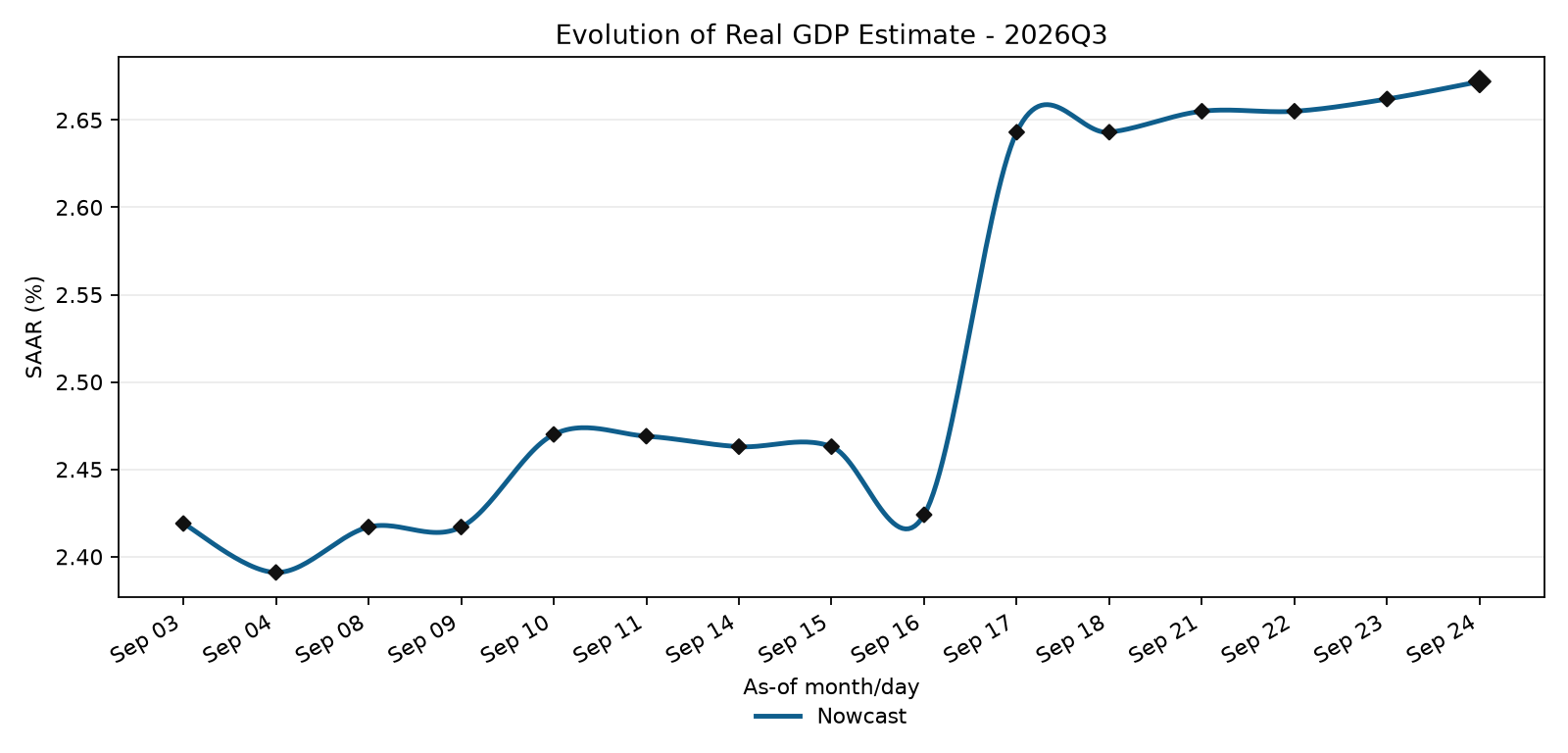
The GDP Dynamics nowcast for third-quarter U.S. real GDP growth edged up to 2.67% SAAR, an increase of just 0.01 percentage point from yesterday’s estimate of 2.66%.
That translates into approximately 0.67% quarter-over-quarter growth before annualization.
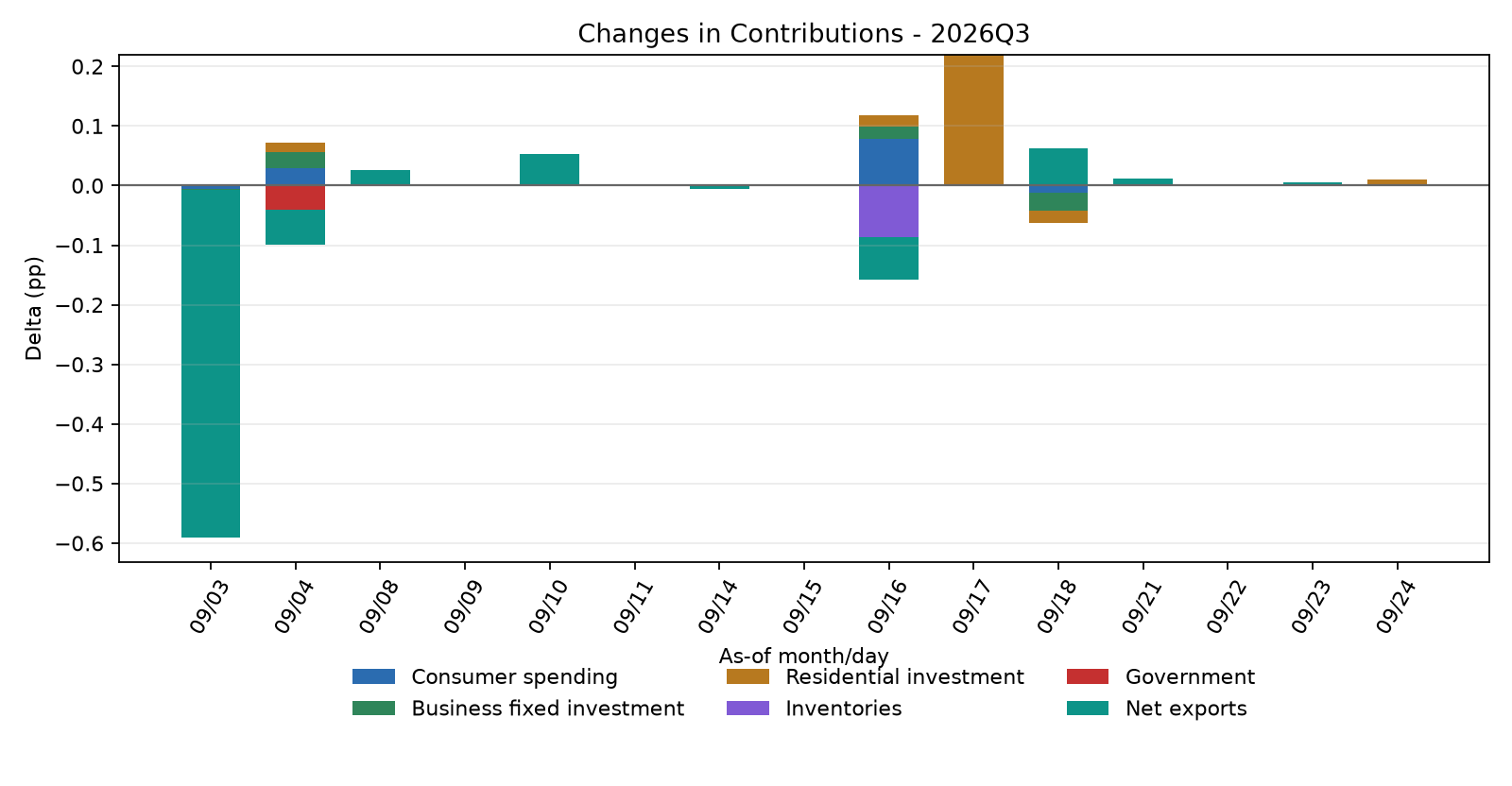
It is a very small revision, and this time the change came entirely from residential investment. The model increased residential investment's contribution to Q3 growth by roughly 0.01 percentage point, while the estimated contributions from the other major components were effectively unchanged.
Housing Gives the Nowcast a Small Lift
The latest housing data provide a mixed picture rather than evidence of a broad housing rebound.
August single-family housing starts rose to a seasonally adjusted annual rate of 918,000, up 7.6% from July, according to the Census Bureau. That strength was partially offset elsewhere in the report. Total housing starts declined 2.6%, while single-family building permits fell 1.8%, from a revised 894,000 in July to 878,000 in August.
That distinction matters for the nowcast. Residential construction is showing some improvement in actual single-family building activity, but the forward-looking permit data remain softer. The result in the GDP Dynamics model is therefore modest: residential investment's estimated contribution increased by only 0.01 percentage point, bringing its current contribution to approximately +0.05 percentage point.
There is also still a significant interest-rate headwind hanging over housing. Freddie Mac reported today that the average 30-year fixed mortgage rate increased to 7.03%, up from 6.95% last week and 6.76% two weeks ago.
So while recent construction activity gave residential investment a small boost in the model, financing conditions are moving in the opposite direction. That is one reason I would be cautious about interpreting today's increase as the beginning of a sustained acceleration in residential investment.
Contribution Changes
The Labor Market Remains Firm
Today's initial unemployment claims release also continues to show relatively few layoffs.
Initial claims came in at 197,000 for the week ending September 19, down 1,000 from the previous week's revised 198,000. The four-week moving average declined to 202,250 from a revised 204,000.
There was therefore little in today's claims report to suggest a sudden deterioration in labor-market conditions. That matters for the consumption side of the model because employment and income conditions remain important inputs into household spending.
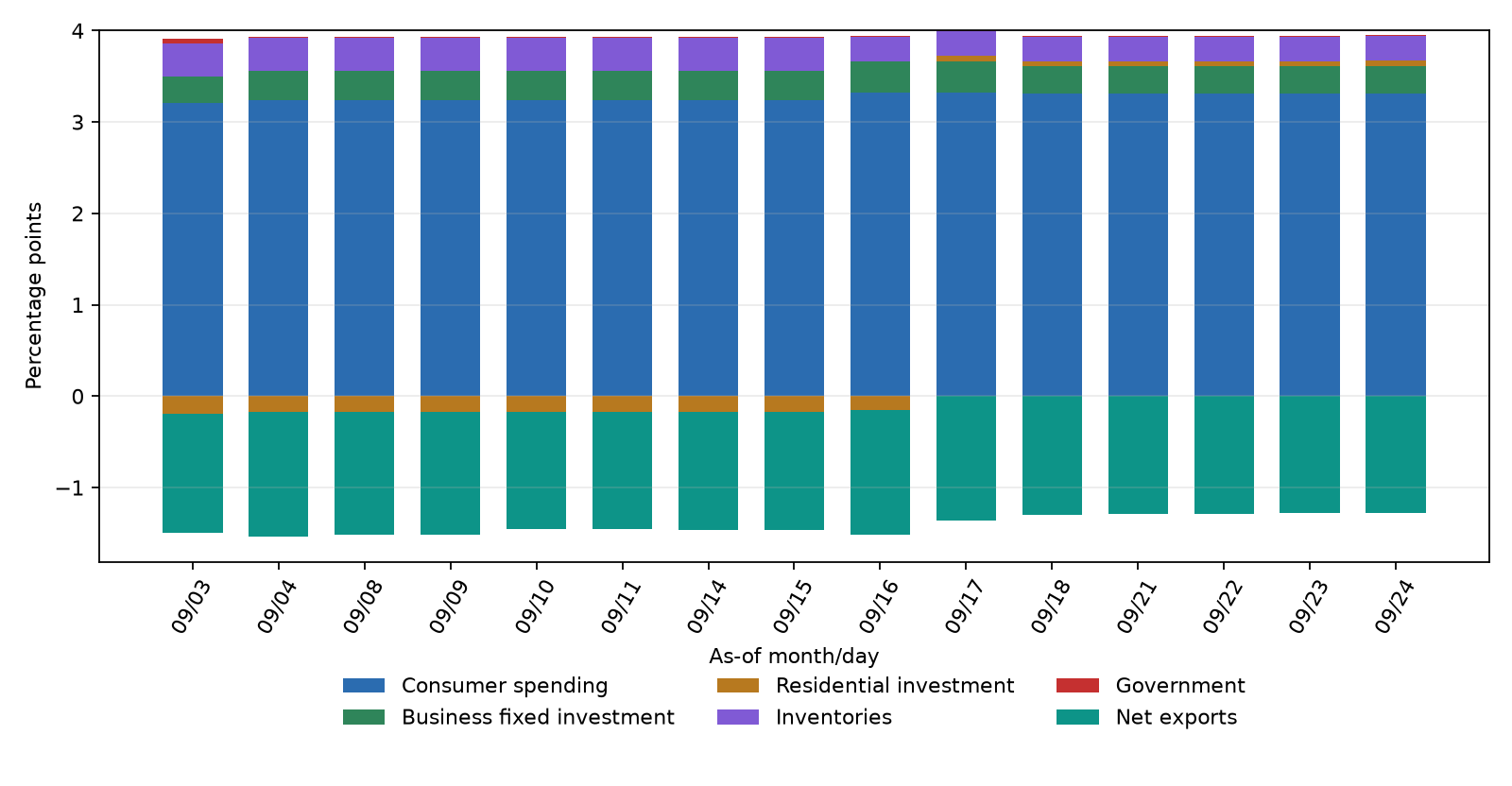
Consumer spending's estimated contribution did not change materially in today's update, however. It remains at approximately +3.31 percentage points. That is the largest contribution level in the model, but the important point for today's update is that it didn't move. The increase in the overall nowcast came from residential investment rather than consumption.
Where the Q3 Nowcast Stands
The composition of the 2.67% nowcast remains fairly uneven.
Consumer spending currently contributes approximately +3.31 percentage points, business fixed investment contributes +0.31, inventories contribute +0.28, residential investment contributes +0.05, and government contributes about +0.01.
The major offset continues to come from net exports, which subtract approximately 1.28 percentage points from estimated Q3 growth.
In other words, the underlying picture changed very little today. The positive contribution from domestic spending continues to be partially offset by trade, while residential investment provided only a marginal upward revision.
Contribution Levels
A Stable Nowcast, for Now
Today's move from 2.66% to 2.67% is essentially a stabilization rather than a meaningful change in the outlook.
The housing data contain some encouraging signs, particularly the increase in single-family starts, but falling permits and mortgage rates moving back above 7% complicate the picture. Meanwhile, initial unemployment claims remain low and provide little evidence so far of a significant increase in layoffs.
The result is a Q3 nowcast that has barely moved from yesterday.
That will not necessarily remain the case for long. The Census Bureau's release calendar has the August durable goods report scheduled for September 25 and the Advance Economic Indicators report for September 30, including advance international trade data. Those releases have the potential to provide substantially more information about business investment and trade than today's small housing-driven revision.
Nowcast Path
The GDP Dynamics Q3 nowcast currently stands at 2.67% SAAR. I will continue updating the estimate as new economic data are released.