GDP Nowcast Holds at 3.16% as Financial Conditions Shift
Date: 2026-08-31Author: GDP Dynamics
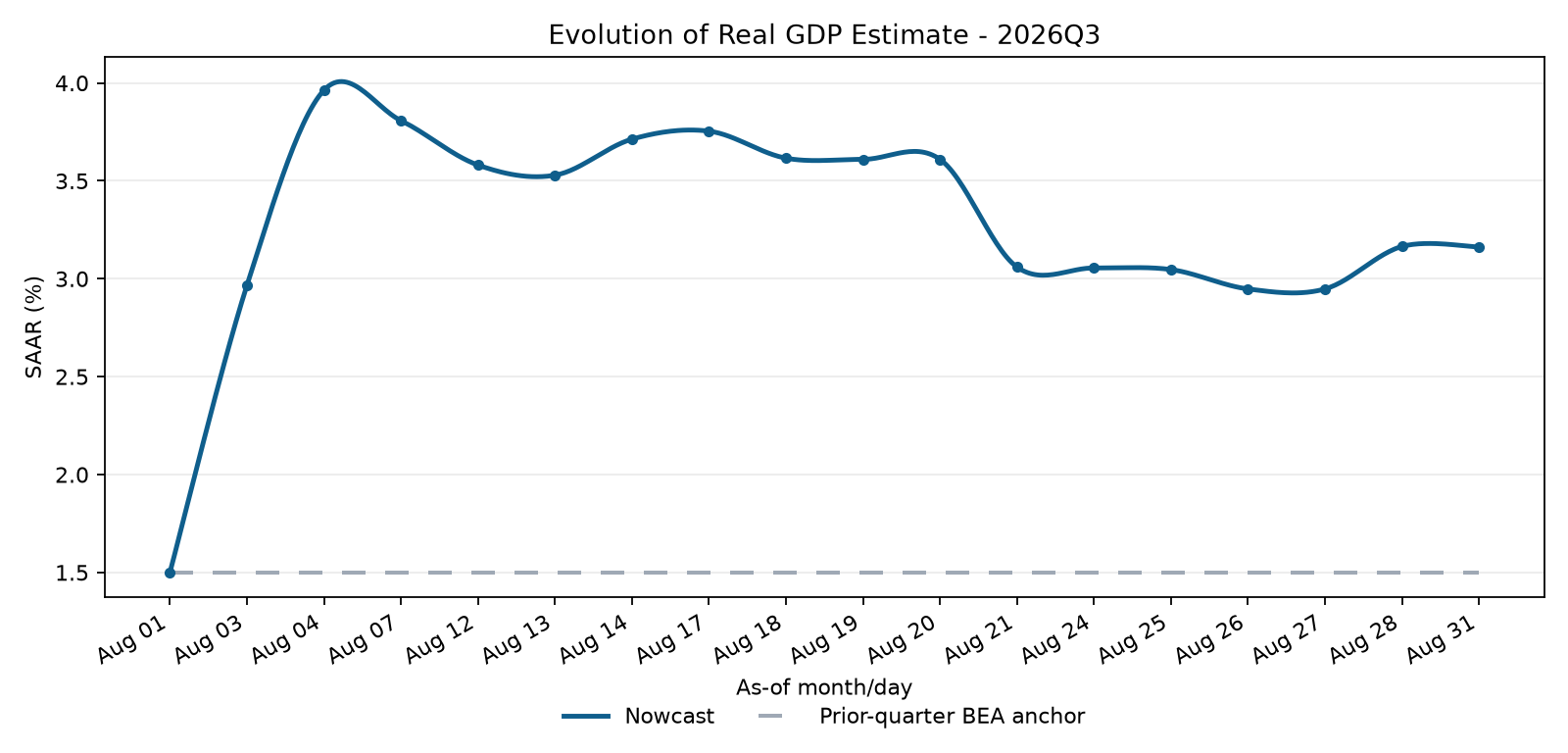
My GDP Dynamics nowcast for third-quarter U.S. real GDP growth remains at 3.16% SAAR, equivalent to roughly 0.79% quarter-over-quarter growth. The estimate was effectively unchanged from Friday’s update, with the movement in the model too small to register after rounding.
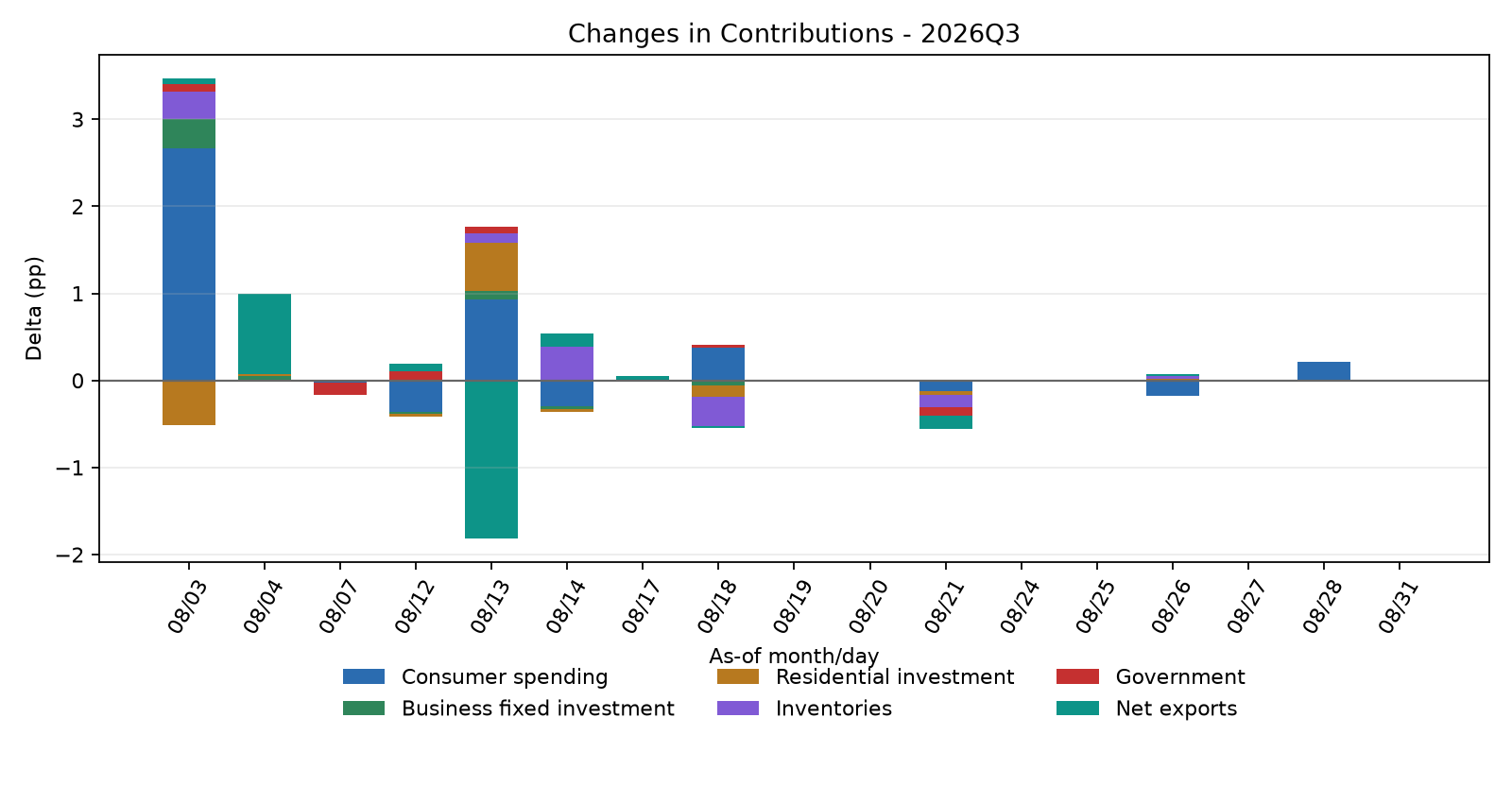
That lack of movement does not mean nothing changed in the underlying data. Monday's update incorporates new readings from the Broad Dollar Index and the 10-year Treasury yield. Both are financial variables rather than direct measures of third-quarter production or spending, so I would not expect either one by itself to produce a large change in the headline GDP estimate.
Nowcast Path
The more interesting development came from the bond market. Treasury yields moved higher late last week following Federal Reserve Chair Kevin Warsh's Jackson Hole remarks. Warsh indicated that the Fed could raise rates if inflation fails to make clear progress toward the 2% target, causing markets to increase the probability they assign to a September rate hike. The 10-year Treasury yield had already moved from 4.64% on August 25 to 4.67% by August 27, and yields moved higher again following Warsh's speech.
The dollar strengthened alongside that repricing. Higher expected U.S. interest rates can support the dollar by increasing the relative return on dollar-denominated assets. That matters to the model primarily through the external side of the economy, where exchange-rate movements can eventually influence exports and imports. For this update, however, the resulting change was extremely small.
Contribution Changes
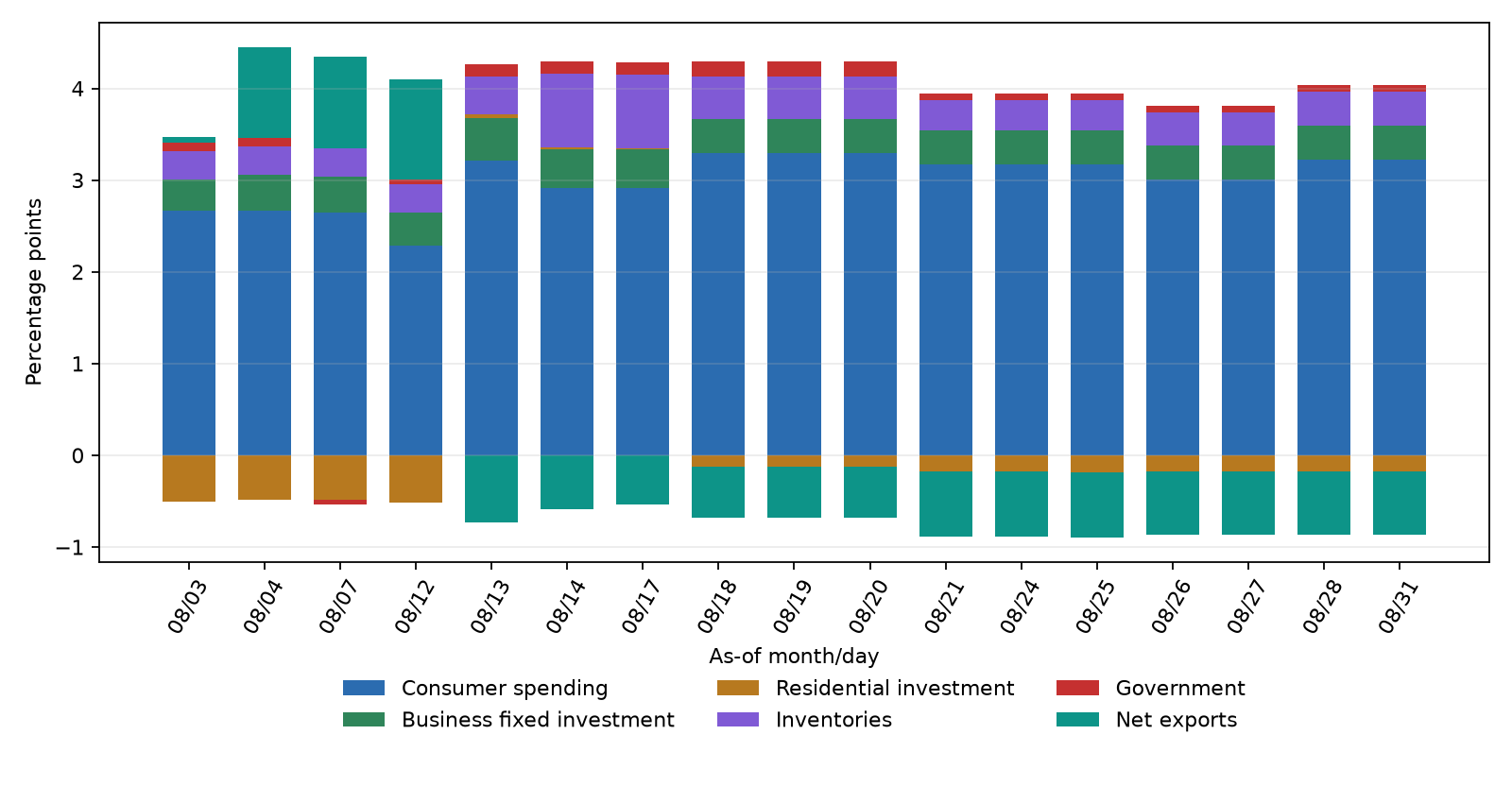
The composition of the nowcast therefore remains much more important than today's movement in the headline number. Consumer spending is currently contributing 3.22 percentage points to Q3 growth and remains by far the strongest part of the forecast. Business fixed investment contributes another 0.38 percentage points, while inventories add 0.36 percentage points.
Contribution Levels
The largest drag remains net exports, which subtract 0.70 percentage points from growth. Residential investment is also negative at -0.17 percentage points, while government spending contributes a relatively small 0.07 percentage points.
That composition leaves the current 3.16% forecast unusually dependent on household spending. Consumption alone is contributing slightly more than the final GDP growth estimate because weakness elsewhere, particularly net exports and residential investment, is offsetting part of that strength.
For now, there is not enough new information in Monday's releases to materially alter my view of Q3. The model continues to point toward growth a little above 3%, but the internal picture is considerably less uniform than the headline number suggests.
The next important updates will be the releases that tell us whether the strength in consumption is being matched elsewhere in the economy. I will be watching incoming labor-market, production, construction, trade and spending data closely as the quarter progresses. Those releases have much greater potential to move the forecast than the financial-market variables incorporated today.
The latest GDP Dynamics nowcast and model updates are available at GDPDynamics.com.