GDP Nowcast Slips to 2.95% as Consumer Spending Softens
Date: 2026-08-26Author: GDP Dynamics
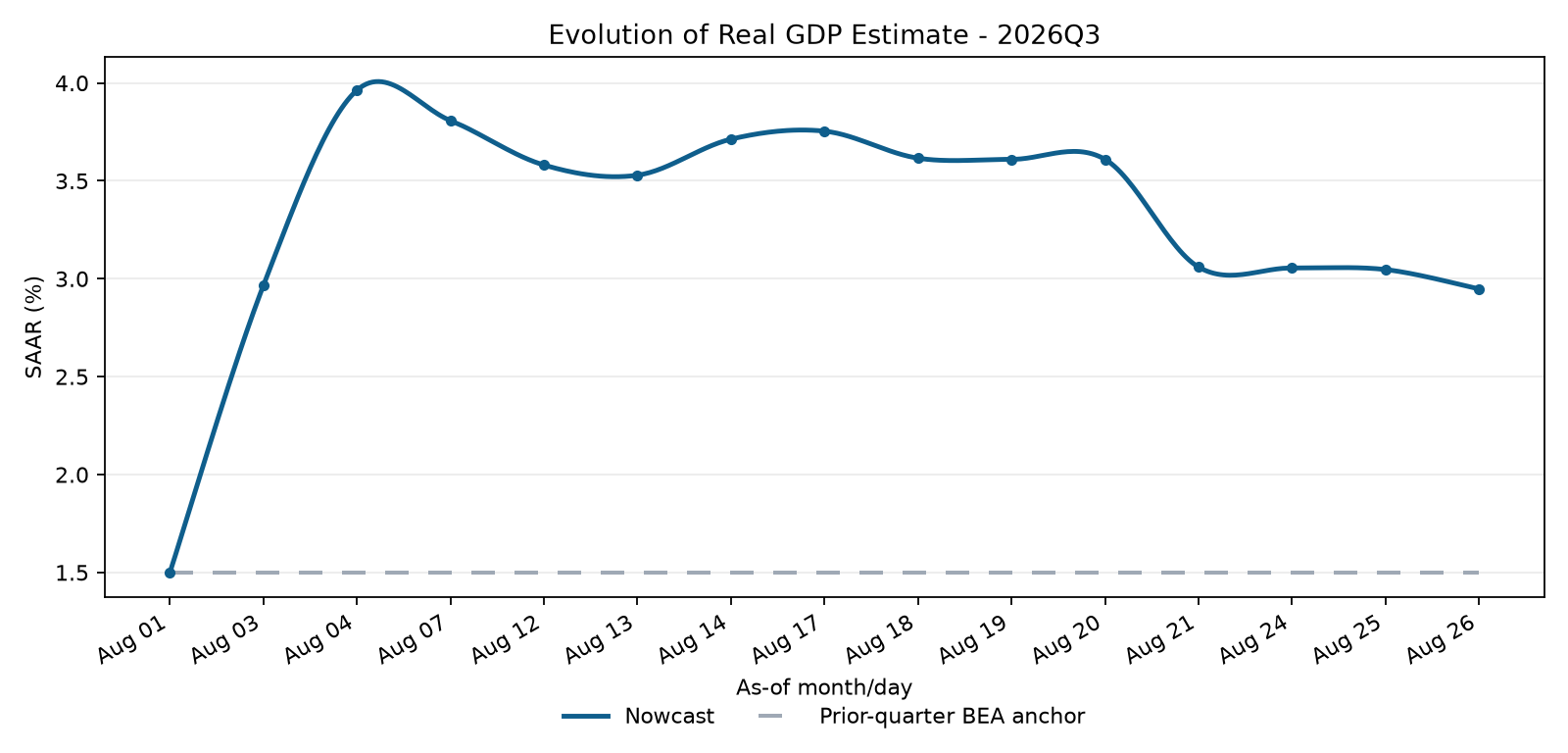
The GDP Dynamics nowcast for 2026Q3 edged down to 2.95% on August 26, a decline of 0.10 percentage points from the previous update. The move was not driven by a broad deterioration across the economy. Most major categories were little changed or improved slightly. The decline came almost entirely from a weaker consumer spending signal following the latest Personal Income and Outlays release.
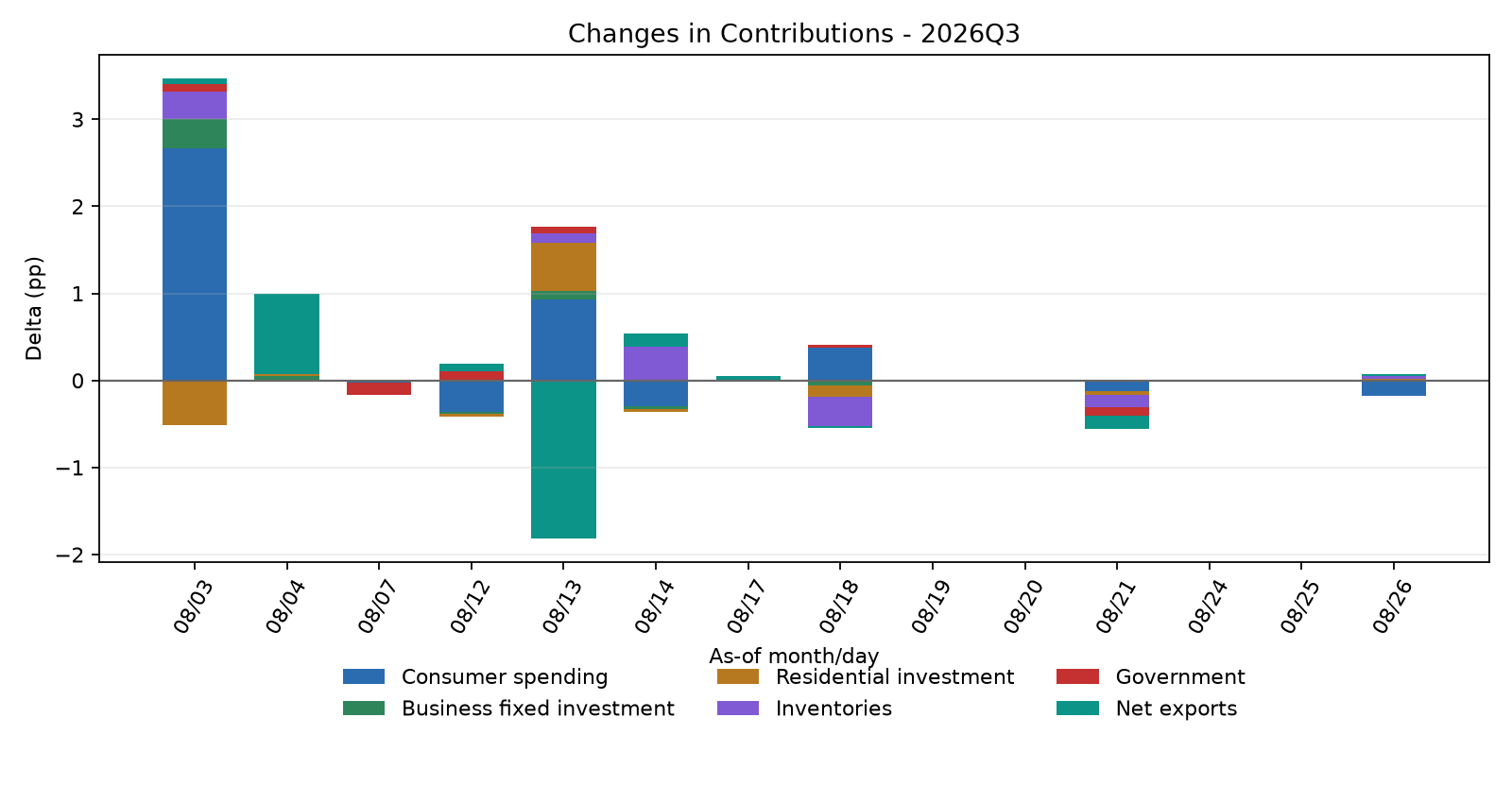
Consumer spending remains the largest positive contributor to growth, adding roughly 3.00 percentage points to the current estimate, but it was also the largest source of downward revision in this update. According to the Bureau of Economic Analysis, personal income rose 0.4 percent in July while disposable income increased 0.5 percent. Spending, however, grew only 0.2 percent and real consumer spending was essentially flat for the month. Services spending continued to rise, but that gain was partially offset by weaker goods spending.
For the nowcast model, that combination matters. Rising incomes suggest households still have the capacity to spend, but flat real consumption implies consumers were more cautious during July than earlier in the quarter. That softer spending signal reduced the model's estimate for third-quarter growth and accounted for most of the 0.17 percentage point drag from consumption.
Nowcast Path
Outside of consumer spending, the news was generally constructive.
Business fixed investment added 0.01 percentage points to the nowcast. July durable goods orders rose 1.1 percent, beating expectations, while orders excluding transportation also increased. Although core capital goods orders grew at a more modest pace, manufacturing demand continues to show resilience. Investment tied to technology, data centers, and AI infrastructure remains an important source of support for capital spending.
Residential investment also improved slightly. Housing starts and permit data released earlier in the month pointed to better activity in the single-family market, helping lift the residential investment estimate by 0.01 percentage points. The sector is still a net drag on growth for the quarter, but conditions appear somewhat less negative than they did earlier this summer.
Net exports contributed another 0.02 percentage points. The trade component remains negative overall, subtracting 0.69 percentage points from growth, but the balance improved modestly in this update. The stronger signal likely reflects a combination of stable export demand and somewhat softer import growth heading into the latest trade releases.
Inventories provided the largest positive offset, adding 0.04 percentage points. Recent inventory and sales data suggest businesses continue rebuilding stocks while demand remains firm enough to prevent a sharp rise in inventory-to-sales ratios. That points more toward intentional stock building than unwanted accumulation, which is generally a healthier signal for future production.
Contribution Changes
Government spending was effectively unchanged in the update. Public-sector indicators remain stable, leaving government consumption and investment responsible for only a small portion of the overall growth estimate.
The broader picture remains one of moderate economic expansion. Consumer spending has cooled from the stronger pace seen earlier in the year, but business investment remains supportive, housing is no longer deteriorating at the same pace, and inventories continue to provide a tailwind. The result is a nowcast that moved slightly lower but still points to growth running near a 3 percent annualized pace.
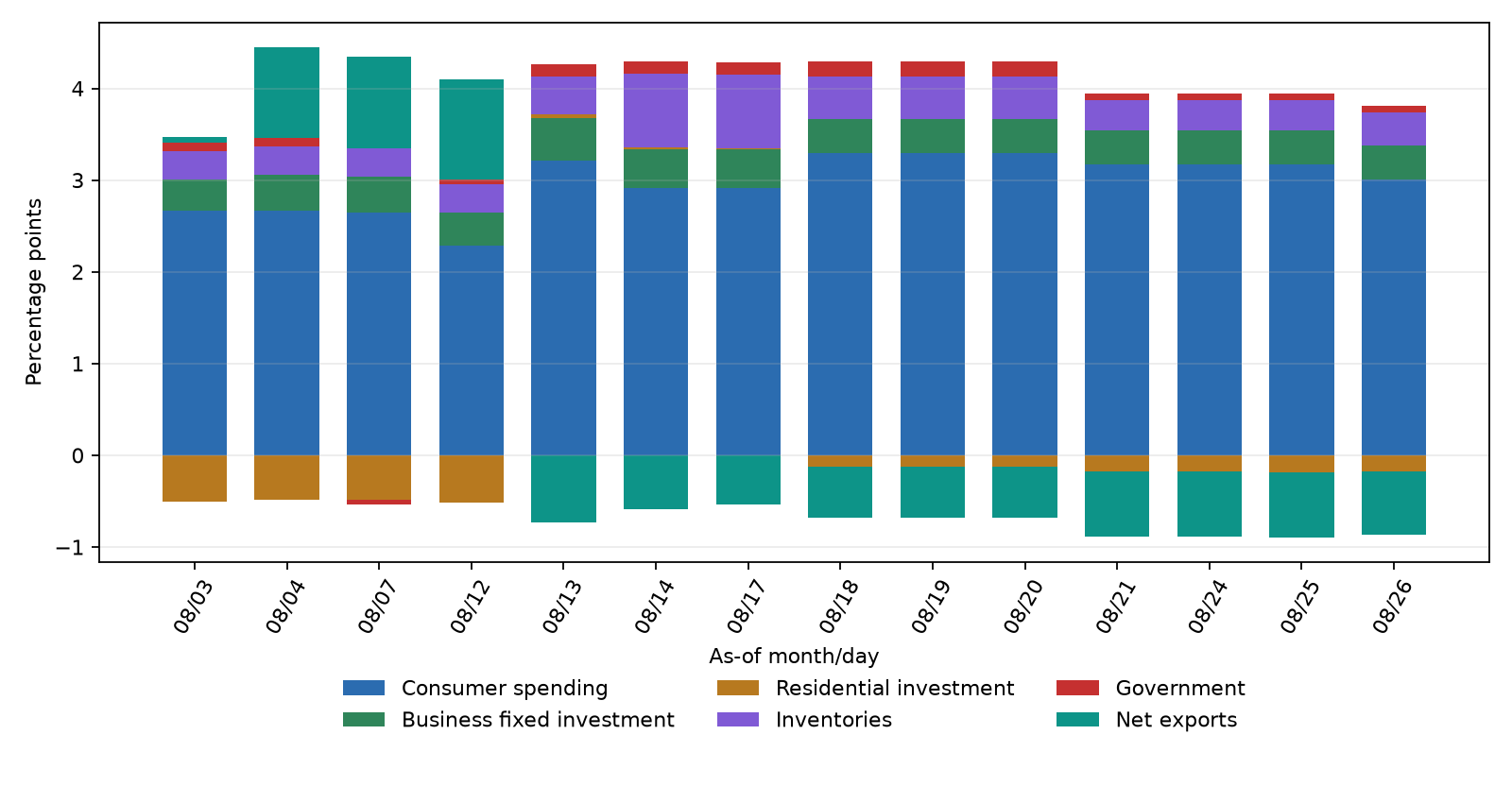
Current contribution levels show consumer spending carrying most of the expansion, with business investment and inventories providing additional support. Net exports remain the largest drag on the quarter, while residential investment is still slightly negative.
Contribution Levels
Source: GDP Dynamics nowcast model. Follow daily updates and methodology details at GDPDynamics.com.